2021/10/27
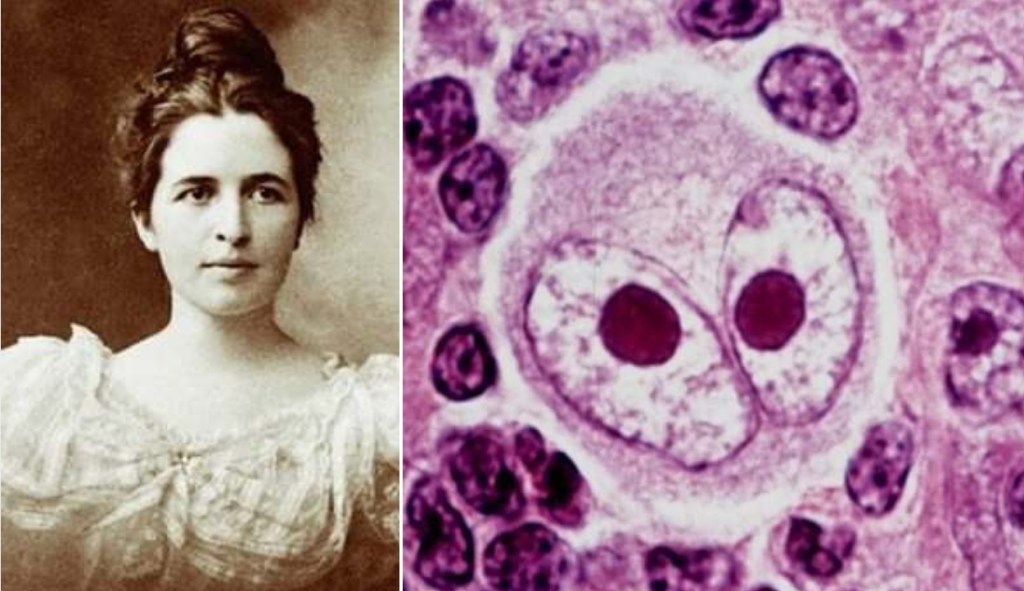
Dorothy Mabel Reed (1874-1964), recordada por las células de Reed-Sternberg, típicas del linfoma de Hodgkin, pasó fugazmente por la patología. Graduada en el 1900 de la Johns Hopkins University School of Medicine, hizo el internado con William Osler (1849-1919), y fue, por un año, University Fellow en el Departamento de Patología dirigido por William Henry Welch (1850-1934). En ese año hizo 13 autopsias, escribió y publicó el artículo que la hizo conocida y otros dos (uno de ellos realizado cuando aún era estudiante). Allí terminó su carrera como patóloga, luego se dedicó a la pediatría.

En su artículo «On the pathological changes in Hodgkin’s disease, with especial reference to its relation to tuberculosis» describe con detalles la Enfermedad de Hodgkin en un texto que tiene 63 páginas, 52 referencias bibliográficas, una descripción completa de las historias clínicas de los ocho casos estudiados, fotografías de los enfermos, y dibujos de la misma autora en dos planchas en color.
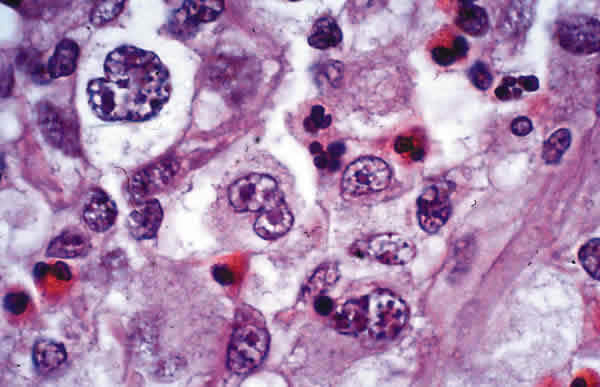
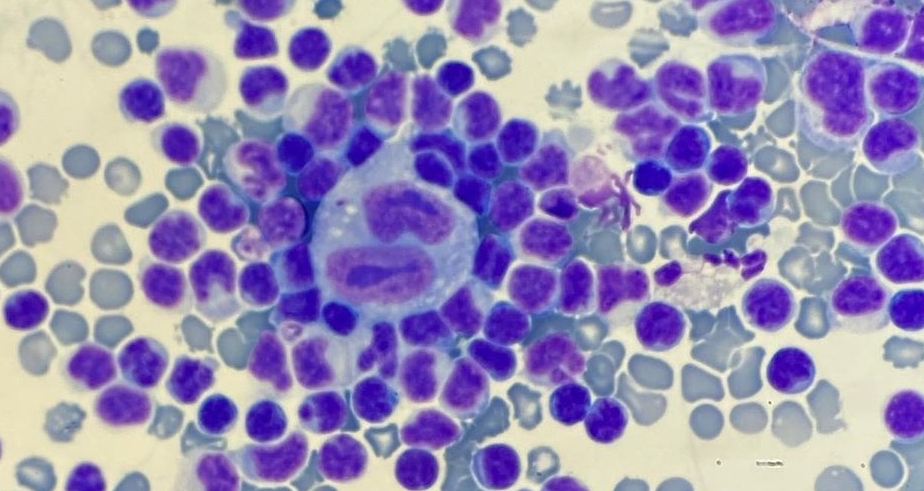
En lo referente a la histología describió e ilustró con detalles a las células características de la enfermedad.
«The nucleus is always large in proportion to the size of the cell. It may be single or multiple. If single, it is usually round. Bean-shaped and irregularly indented nuclei are common. If multiple, the nuclei may be arranged peripherally in the cell, or heaped in the center. Eight or ten nuclei have been seen in a single cell. The chromatin network is prominent in these nuclei, and one or more large nucleoli are always present. The nucleoli are usually oval, but they may be of any shape. The nucleoli always take a contrasting stain to the nucleus in the double stains, they have an affinity for acid dyes. No definite mitotic figures were ever seen in these cells. Direct division was frequently observed. The protoplasm is usually homogeneous, and stains well. It may appear granular, show vacuolization, or contain fat or pigment granules. Cells having bizarre and irregular nuclei are found in the oldest growths. These giant cells, so far as our observation reaches, are peculiar to this growth, and are of great assistance in diagnosis.»
Reed. 1902
En el siguiente enlace puede leerse el artículo «DOROTHY REED, PATÓLOGA FUGAZ» escrito por el Dr Juan Antonio Barcat en la revista Medicina.
O bien descargarlo desde aquí
 Dr Enrique Vicente Greco - Médico