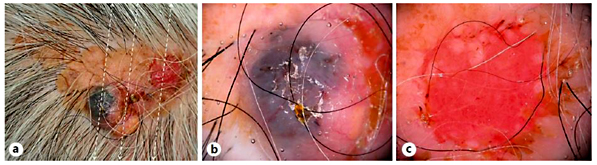
Case Rep Dermatol 2016;8:75-79. (DOI:10.1159/000445822). Four Different Tumors Arising in a Nevus Sebaceous. Namiki T.a · Miura K.b · Ueno M.a · Arima Y.a · Nishizawa A.a · Yokozeki H.a Departments of aDermatology and bPathology, Graduate School of Medical and Dental Sciences, Tokyo Medical and Dental University, Tokyo, Japan. Abstract: Nevus sebaceous is known bySigueSigue leyendo «Four Different Tumors Arising in a Nevus Sebaceous.»
Archivo del autor: patologiadrgreco
Eccrine Poroma Arising within Nevus Sebaceous.
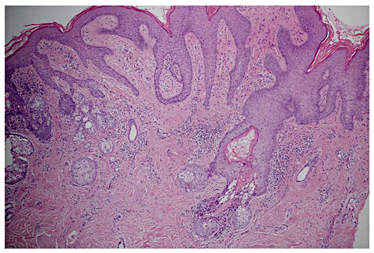
Case Rep Dermatol 2016;8:80-84. (DOI:10.1159/000445537). Eccrine Poroma Arising within Nevus Sebaceous. Girdwichai N. · Chanprapaph K. · Vachiramon V. Division of Dermatology, Department of Medicine, Faculty of Medicine Ramathibodi Hospital, Mahidol University, Bangkok, Thailand. Abstract: Nevus sebaceous is a congenital, benign hamartomatous lesion, characterized by a yellowish to skin-colored, hairless, verrucous plaque on the headSigueSigue leyendo «Eccrine Poroma Arising within Nevus Sebaceous.»
Feliz Año Nuevo – Felice Anno Nuovo – Happy New Year…!!!

Esta vez no hay cursos, conferencias, artículos científicos ni llamados a congresos médicos. Sencillamente gracias a todos aquellos que han visitado mi página en estos primeros meses de vida. Desde donde quiera que estén, desde donde viva cada uno de ustedes, sean de la religión que sean, del color de piel que sean, del regimenSigueSigue leyendo «Feliz Año Nuevo – Felice Anno Nuovo – Happy New Year…!!!»
Curso Internacional de Postgrado y XXIV Congreso Mundial – International Postgraduate Course and XXIV World Congress ISSVD.

Próxima Participación: La Sociedad Internacional para el Estudio de la Enfermedad Vulvovaginal (ISSVD = The International Society for the Study of Vulvovaginal Disease) anuncia la realización en la Ciudad de Mendoza, Argentina, del Curso Internacional de Postgrado los días 11 y 12 de septiembre de 2017 seguido por la realización del XXIV Congreso Internacional delSigueSigue leyendo «Curso Internacional de Postgrado y XXIV Congreso Mundial – International Postgraduate Course and XXIV World Congress ISSVD.»
Vulvovaginal Disease Update 2017.
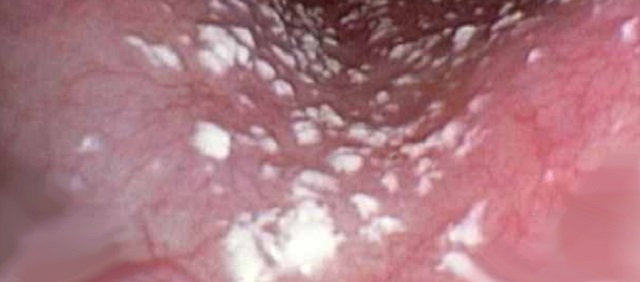
March 17, 2017. Held at: Baylor College of Medicine, Texas Children’s Hospital Pavilion for Women, Houston, TX. Texas Children’s Pavilion for Women 6651 Main St. Houston, TX 77030 Co-Sponsored by: The North American Chapter of The International Society for the Study of Vulvovaginal Disease & The Vulvovaginal Health Clinic Baylor College of Medicine at Texas Children’sSigueSigue leyendo «Vulvovaginal Disease Update 2017.»
Advanced Soft Tissue Sarcoma: Current and Future CME.
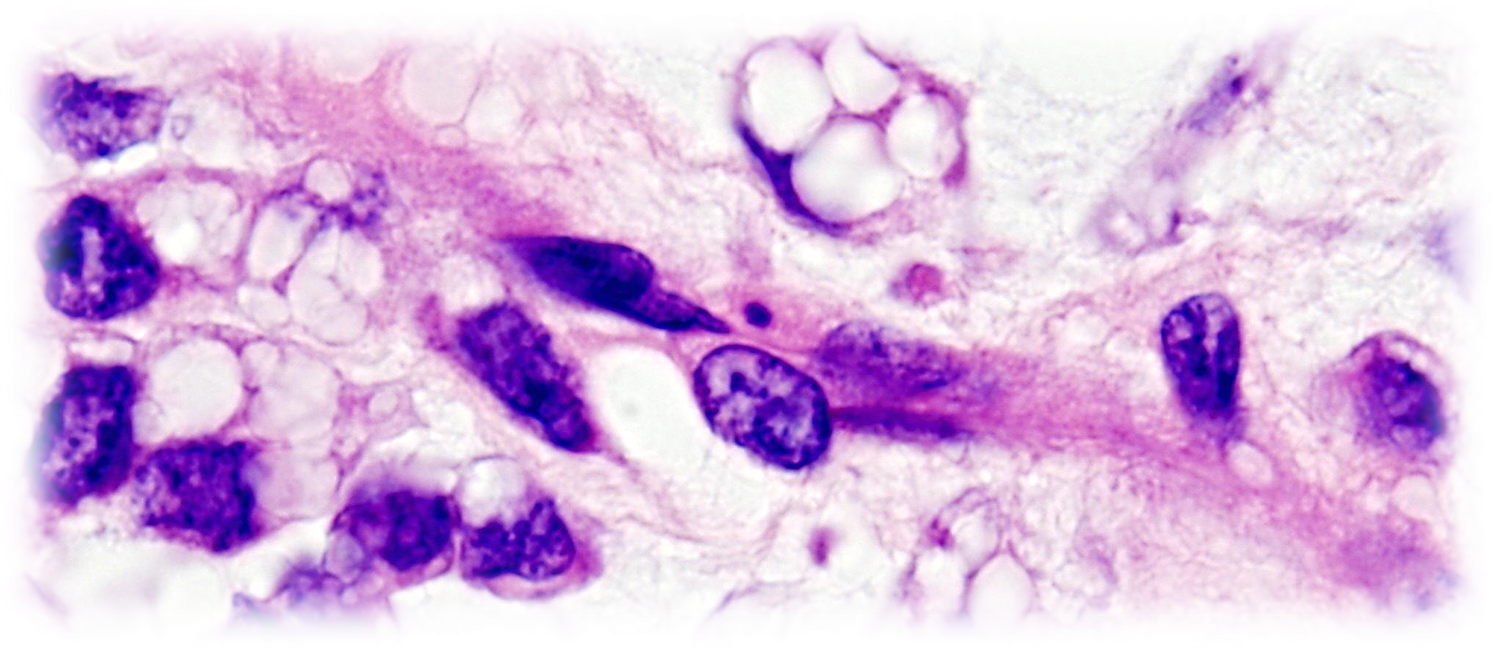
Activity Evaluation from Medscape Education. WebMD Global requires each individual who is in a position to control the content of one of its educational activities to disclose any relevant financial relationships occurring within the past 12 months that could create a conflict of interest. Robin L. Jones, BSc, MB BS, MRCP, MD: Consultant Medical Oncologist;SigueSigue leyendo «Advanced Soft Tissue Sarcoma: Current and Future CME.»
Modeling high-grade serous carcinoma: how converging insights into pathogenesis and genetics are driving better experimental platforms.
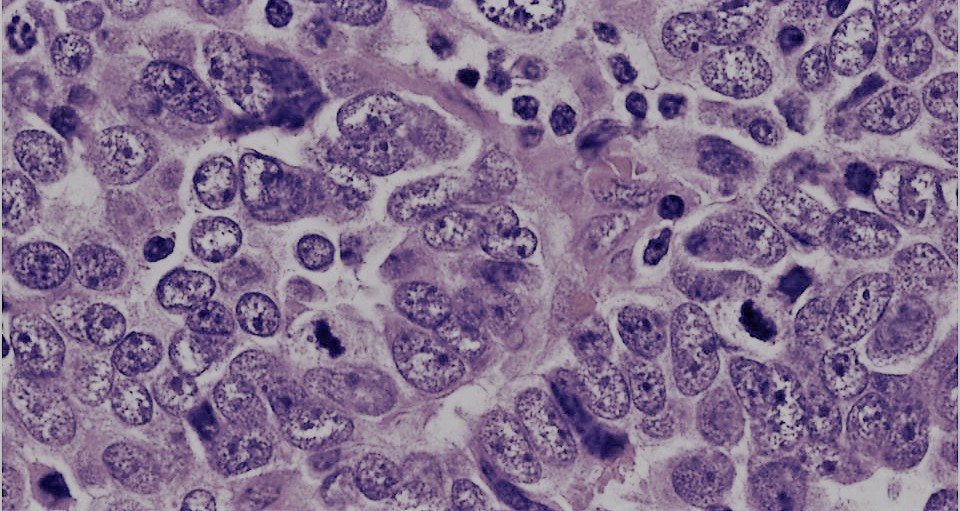
Paul Michael Jones and Ronny Drapkin. Department of Medical Oncology, Harvard Medical School, Dana-Farber Cancer Institute, Boston, MA, USA. Recent developments in the study of epithelial ovarian cancer have called into question the traditional views regarding the site of tumor initiation. Histopathologic studies and genomic analyses suggest that extra-ovarian sites, like the fallopian tube, maySigueSigue leyendo «Modeling high-grade serous carcinoma: how converging insights into pathogenesis and genetics are driving better experimental platforms.»
The fallopian tube as the origin of non-uterine pelvic high-grade serous carcinoma.
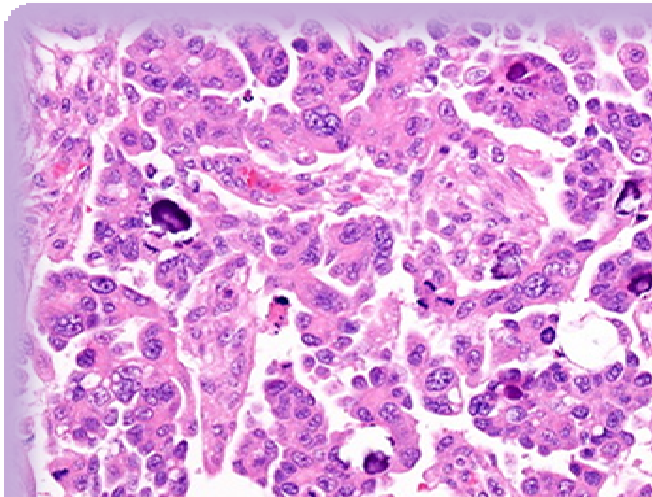
Ieera Madan Aggarwal, Yu Hui Lim, Timothy Yong Kuei Lim. Abstract. Key content: Advances in histopathology, immunohistochemistry and molecular genetics have led to evidence that the fimbrial end of the fallopian tube may be the source of origin of non-uterine high-grade pelvic serous carcinoma (HGPSC). Most of the evidence comes from studies in risk-reducing salpingo-oophorectomySigueSigue leyendo «The fallopian tube as the origin of non-uterine pelvic high-grade serous carcinoma.»
The management of endometrial polyps in the 21st century.
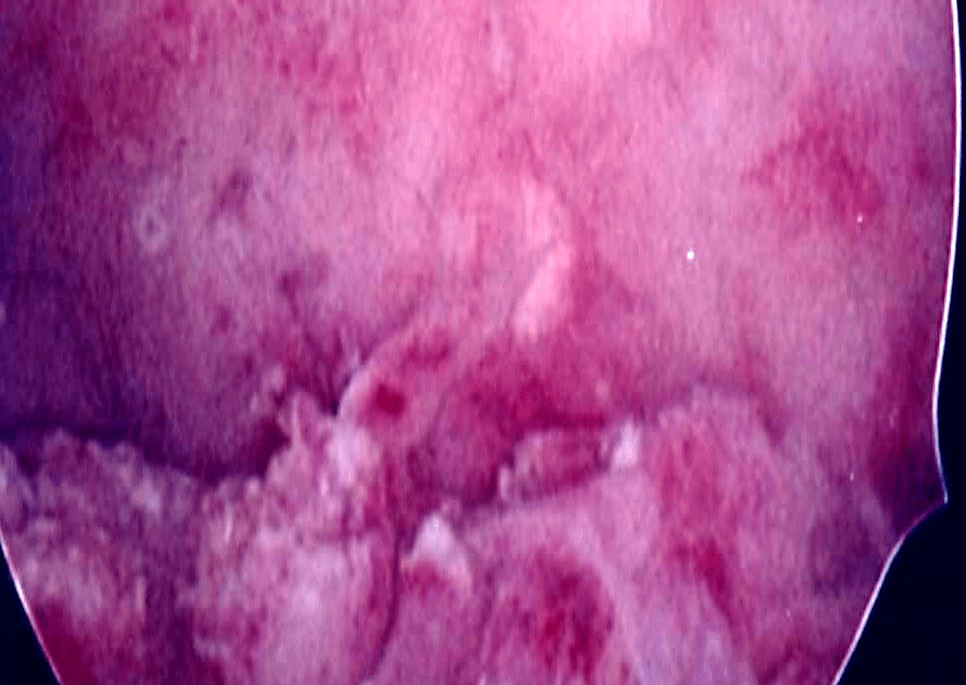
Annan JJ, Aquilina J, Ball E. The management of endometrial polyps in the 21st century. The Obstetrician & Gynaecologist 2012;14:33–38. Abstract. Key content: Hysteroscopic endometrial polyp removal appears to be superior to the current practice of blind avulsion. Outpatient treatment is safe, cost effective and well tolerated, even in older or nulliparous women. New technologiesSigueSigue leyendo «The management of endometrial polyps in the 21st century.»
Influence of decalcification procedures on immunohistochemistry and molecular pathology in breast cancer.
Willemijne A M E Schrijver, Petra van der Groep, Laurien DC Hoefnagel, Natalie D ter Hoeve, Ton Peeters, Cathy B Moelans and Paul J van Diest. Department of Pathology, University Medical Center Utrecht, Utrecht, The Netherlands. Cancer Center, University Medical Center Utrecht, Utrecht, The Netherlands. Abstract: Distant breast cancer metastases are nowadays routinely biopsied to reassess receptor status and to isolateSigueSigue leyendo «Influence of decalcification procedures on immunohistochemistry and molecular pathology in breast cancer.»
Ductal carcinoma in situ with basal-like phenotype: a possible precursor to invasive basal-like breast cancer.
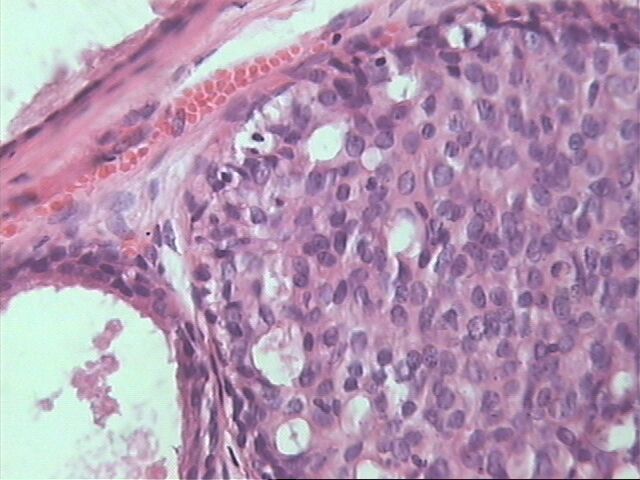
Bradley B Bryan, Stuart J Schnitt and Laura C Collins. Department of Pathology, Beth Israel Deaconess Medical Center and Harvard Medical School, Boston, MA, USA. Abstract: Basal-like carcinomas have recently been identified in gene expression profiling studies as a subtype of invasive breast cancer. These lesions are estrogen receptor (ER)-negative, progesterone receptor (PR)-negative, and HER2-negative (triple negative), andSigueSigue leyendo «Ductal carcinoma in situ with basal-like phenotype: a possible precursor to invasive basal-like breast cancer.»
Differentiating Lymphovascular Invasion from Retraction Artifact on Histological Specimen of Breast Carcinoma and Their Implications on Prognosis.
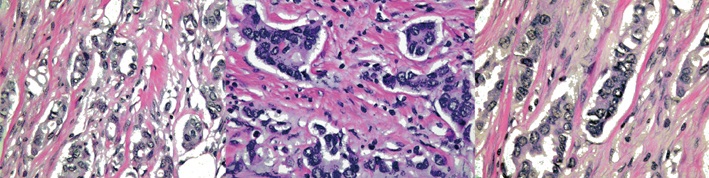
Nicholas George Zaorsky, Ninad Patil,1 Gary Mitchel Freedman,2 and Madalina Tuluc3. Department of Pathology, Fox Chase Cancer Center, Philadelphia, USA. Department of Radiation Oncology, University of Pennsylvania, Philadelphia, USA. Department of Pathology, Jefferson Medical College, Thomas Jefferson University, Philadelphia, USA. Abstract: On a pathological specimen of breast cancer cells, retraction artifact during histological processing mimicsSigueSigue leyendo «Differentiating Lymphovascular Invasion from Retraction Artifact on Histological Specimen of Breast Carcinoma and Their Implications on Prognosis.»
 Dr Enrique Vicente Greco - Médico