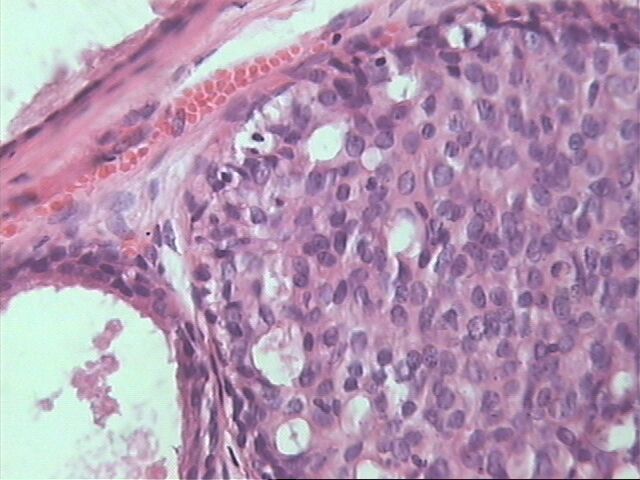
Bradley B Bryan, Stuart J Schnitt and Laura C Collins. Department of Pathology, Beth Israel Deaconess Medical Center and Harvard Medical School, Boston, MA, USA. Abstract: Basal-like carcinomas have recently been identified in gene expression profiling studies as a subtype of invasive breast cancer. These lesions are estrogen receptor (ER)-negative, progesterone receptor (PR)-negative, and HER2-negative (triple negative), andSigueSigue leyendo «Ductal carcinoma in situ with basal-like phenotype: a possible precursor to invasive basal-like breast cancer.»
Archivo de categoría: Biblioteca
Differentiating Lymphovascular Invasion from Retraction Artifact on Histological Specimen of Breast Carcinoma and Their Implications on Prognosis.
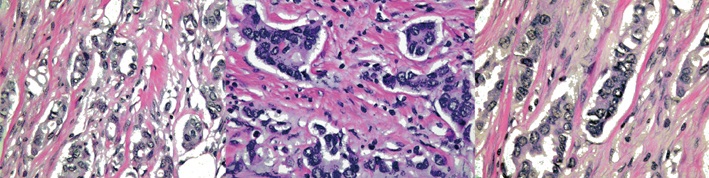
Nicholas George Zaorsky, Ninad Patil,1 Gary Mitchel Freedman,2 and Madalina Tuluc3. Department of Pathology, Fox Chase Cancer Center, Philadelphia, USA. Department of Radiation Oncology, University of Pennsylvania, Philadelphia, USA. Department of Pathology, Jefferson Medical College, Thomas Jefferson University, Philadelphia, USA. Abstract: On a pathological specimen of breast cancer cells, retraction artifact during histological processing mimicsSigueSigue leyendo «Differentiating Lymphovascular Invasion from Retraction Artifact on Histological Specimen of Breast Carcinoma and Their Implications on Prognosis.»
Effect of Occult Metastases on Survival in Node-Negative Breast Cancer.
Original Article. Donald L. Weaver, M.D., Takamaru Ashikaga, Ph.D., David N. Krag, M.D., Joan M. Skelly, M.S., Stewart J. Anderson, Ph.D., Seth P. Harlow, M.D., Thomas B. Julian, M.D., Eleftherios P. Mamounas, M.D., and Norman Wolmark, M.D. Abstract. Background: Retrospective and observational analyses suggest that occult lymph-node metastases are an important prognostic factor for diseaseSigueSigue leyendo «Effect of Occult Metastases on Survival in Node-Negative Breast Cancer.»
Hidradenoma papilífero. Dos artículos. Dos localizaciones. Anal y Vulvar.
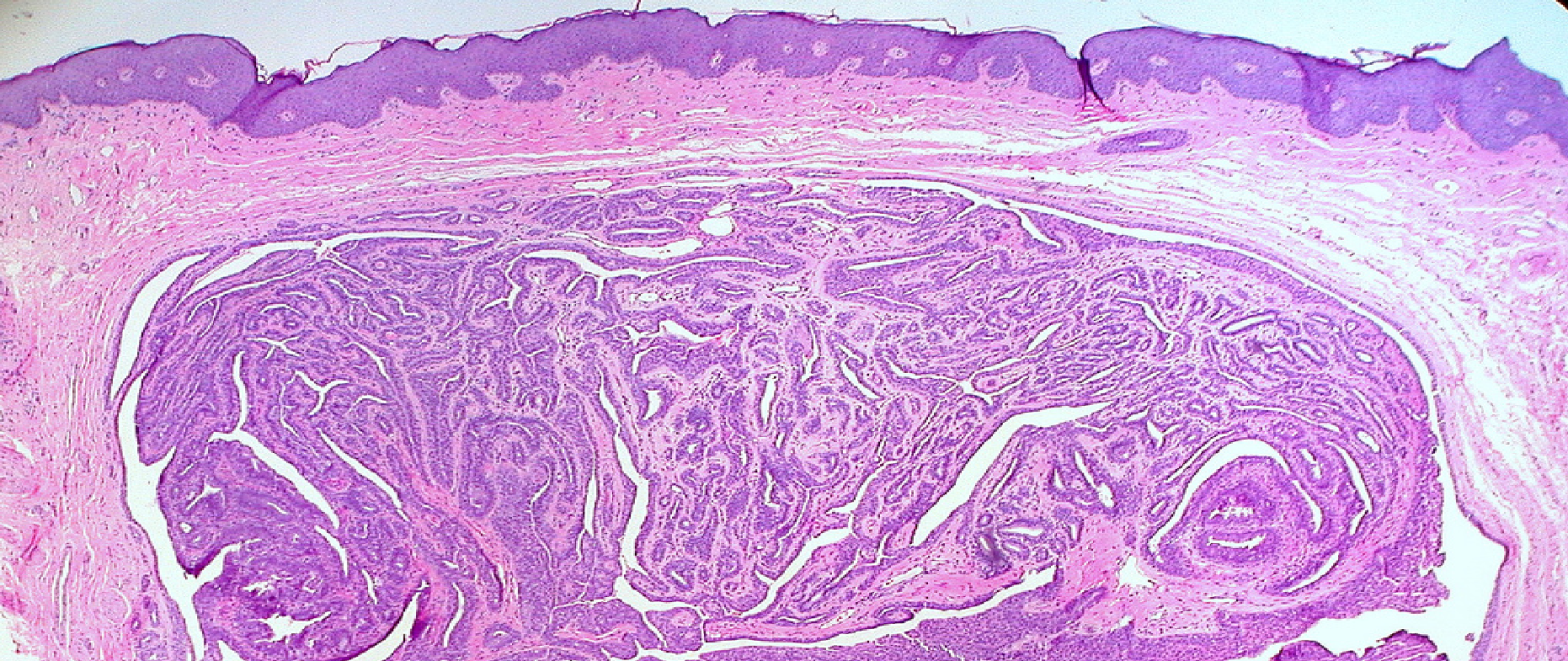
Hidradenoma papilífero anal: presentación de un caso y revisión de la literatura. Resumen El hidradenoma papilífero (HAP) es una neoplasia benigna, quística y papilar poco frecuente que aparece generalmente en la vulva, aunque también se ha descrito en otras localizaciones. Presentamos el caso de una mujer de 47 años con un HAP localizado en elSigueSigue leyendo «Hidradenoma papilífero. Dos artículos. Dos localizaciones. Anal y Vulvar.»
Cervical cancer prevention and screening: the role of human papillomavirus testing. Review.
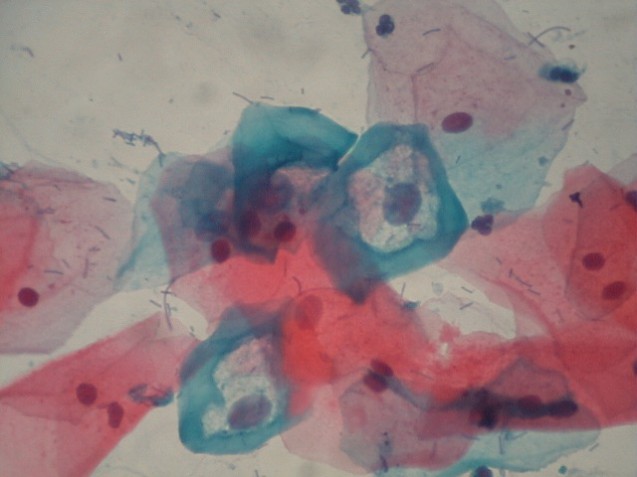
Abstract Key content An organised screening programme has reduced the incidence of cervical cancer in the UK. Cervical screening aims to detect and treat premalignant, low- or high-grade disease. Oncogenic or high-risk human papillomaviruses (HR-HPV) account for over 99.7% of cervical cancer cases; the most common subtypes are HPV-16, 18, 31, 33 and 45.SigueSigue leyendo «Cervical cancer prevention and screening: the role of human papillomavirus testing. Review.»
Non-cervical human papillomavirus-related disease. Review.
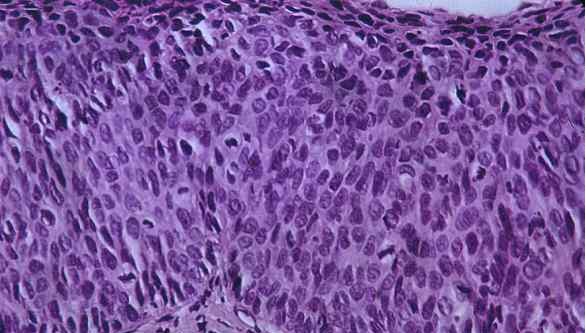
Abstract. Key content. Human papillomavirus (HPV) is associated with neoplastic disease at sites other than the cervix. Cancer caused by HPV may behave differently to other cancers at the same site. The presence of HPV alone is not sufficient to demonstrate a causal association. HPV vaccination has the potential to impact on disease burden beyondSigueSigue leyendo «Non-cervical human papillomavirus-related disease. Review.»
The Natural History of Vulvar Intraepithelial Neoplasia, Differentiated Type: Evidence for Progression and Diagnostic Challenges.
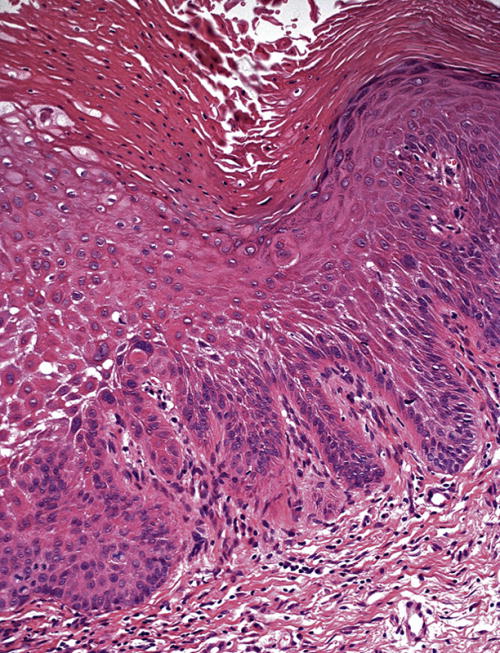
Middlemore Hospital (S.M.B.), Auckland, New Zealand; Department of Gynecological Oncology (L.J.E., K.L.F., R.W.J.), Auckland City Hospital, Auckland, New Zealand. The authors declare no conflict of interest. Abstract. Squamous cell carcinoma of the vulva (SCCV) develops through either human papillomavirus (HPV)-dependent or HPV-independent pathways. Approximately 60% of SCCV arise independently of HPV, commonly in a backgroundSigueSigue leyendo «The Natural History of Vulvar Intraepithelial Neoplasia, Differentiated Type: Evidence for Progression and Diagnostic Challenges.»
Basic Molecular Pathology and Cytogenetics for Practicing Pathologists.
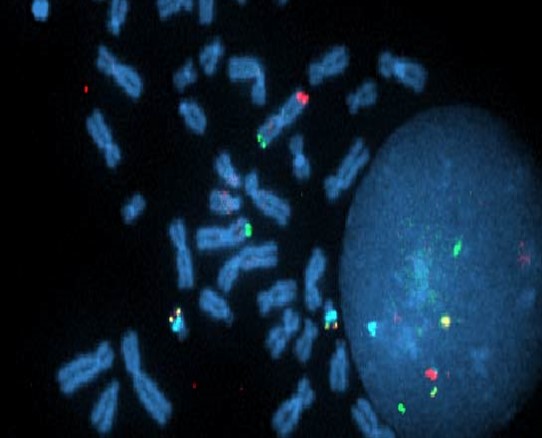
Author Information. *Department of Pathology, North Hospital, University Hospital of St-Etienne, St-Etienne, France. †Department of Pathology, University Hospital of Ioannina, Ioannina, Greece. Abstract. Morphology, as confronted in the everyday practice, often correlates with specific molecular features, which have important implications not only in pathogenesis and in diagnosis but also in prognosis and therapy. Thus, itSigueSigue leyendo «Basic Molecular Pathology and Cytogenetics for Practicing Pathologists.»
Molecular Pathways in Gliomagenesis and Their Relevance to Neuropathologic Diagnosis.
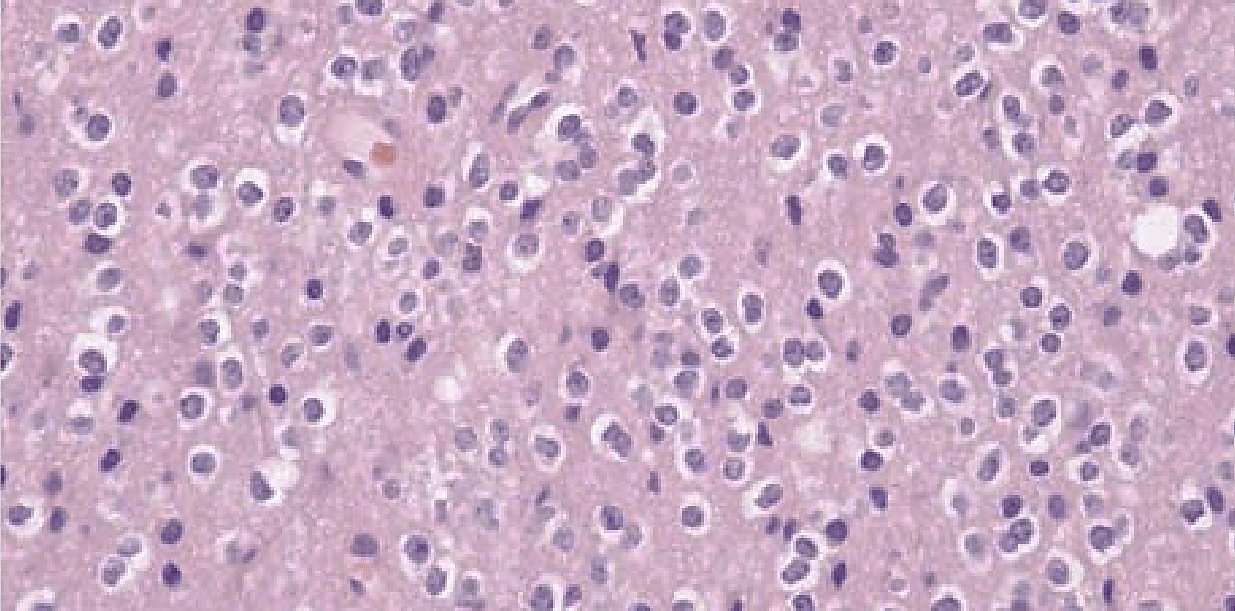
Abstract. Gliomas are a large and diverse group of primary brain tumors that include those that are diffusely infiltrative and others that are well-circumscribed and low grade. Diffuse gliomas are currently classified by the World Health Organization as astrocytomas, oligodendrogliomas, or oligoastrocytomas and range in grade from II to IV. Glioblastoma (GBM), World Health OrganizationSigueSigue leyendo «Molecular Pathways in Gliomagenesis and Their Relevance to Neuropathologic Diagnosis.»
Melanocytic Nevi of Special Sites.

Melanocytic Nevi of Special Sites. Ahn, Christine S. MD; Guerra, Analia MD; Sangüeza, Omar P. MD. Abstract: Melanocytic nevi located on specific regions of the body can demonstrate unusual histopathological features such as asymmetry, irregular nesting patterns, pagetoid spread, cytologic atypia, and rarely, mitotic activity. However, despite these features that may raise concern forSigueSigue leyendo «Melanocytic Nevi of Special Sites.»
Jornadas Internacionales de Patología – 2017. Academia Internacional de Patología – División Argentina.

La División Argentina de la Academia Internacional de Patología informa la realización de las JORNADAS INTERNACIONALES DE PATOLOGIA los días jueves 11 y viernes 12 de mayo de 2017. Las mismas se desarrollarán en el Hotel Castelar sito en la Av. de Mayo 1152 de la Ciudad Autónoma de Buenos Aires, Argentina. INVITADOS INTERNACIONALES GeorgeSigueSigue leyendo «Jornadas Internacionales de Patología – 2017. Academia Internacional de Patología – División Argentina.»
Gastrointestinal and Liver Pathology. 2nd Edition. A Volume in the Foundations in Diagnostic Pathology Series. Expert Consult.

Gastrointestinal and Liver Pathology. 2nd Edition. A Volume in the Foundations in Diagnostic Pathology Series. Expert Consult. Christine A. Iacobuzio-Donahue, MD, PhD, Associate Professor of Pathology, Oncology and Surgery, Johns Hopkins Medical Institutions Department of Pathology, Division of Gastrointestinal and Liver Pathology, Baltimore, Maryland. Elizabeth A Montgomery, MD, Professor of Pathology, Oncology, and Orthopedic Surgery,SigueSigue leyendo «Gastrointestinal and Liver Pathology. 2nd Edition. A Volume in the Foundations in Diagnostic Pathology Series. Expert Consult.»
 Dr Enrique Vicente Greco - Médico